
Last updated November 21, 2026
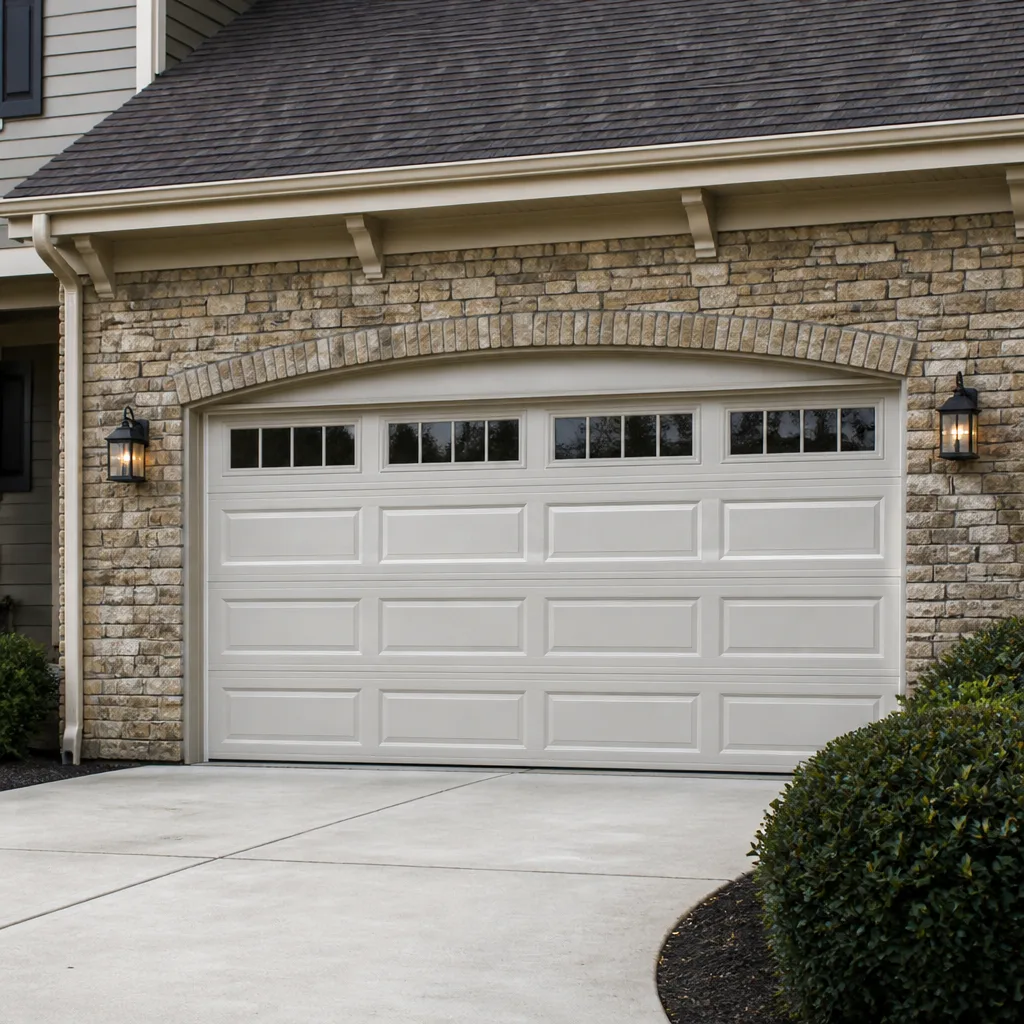 Raised-panel steel
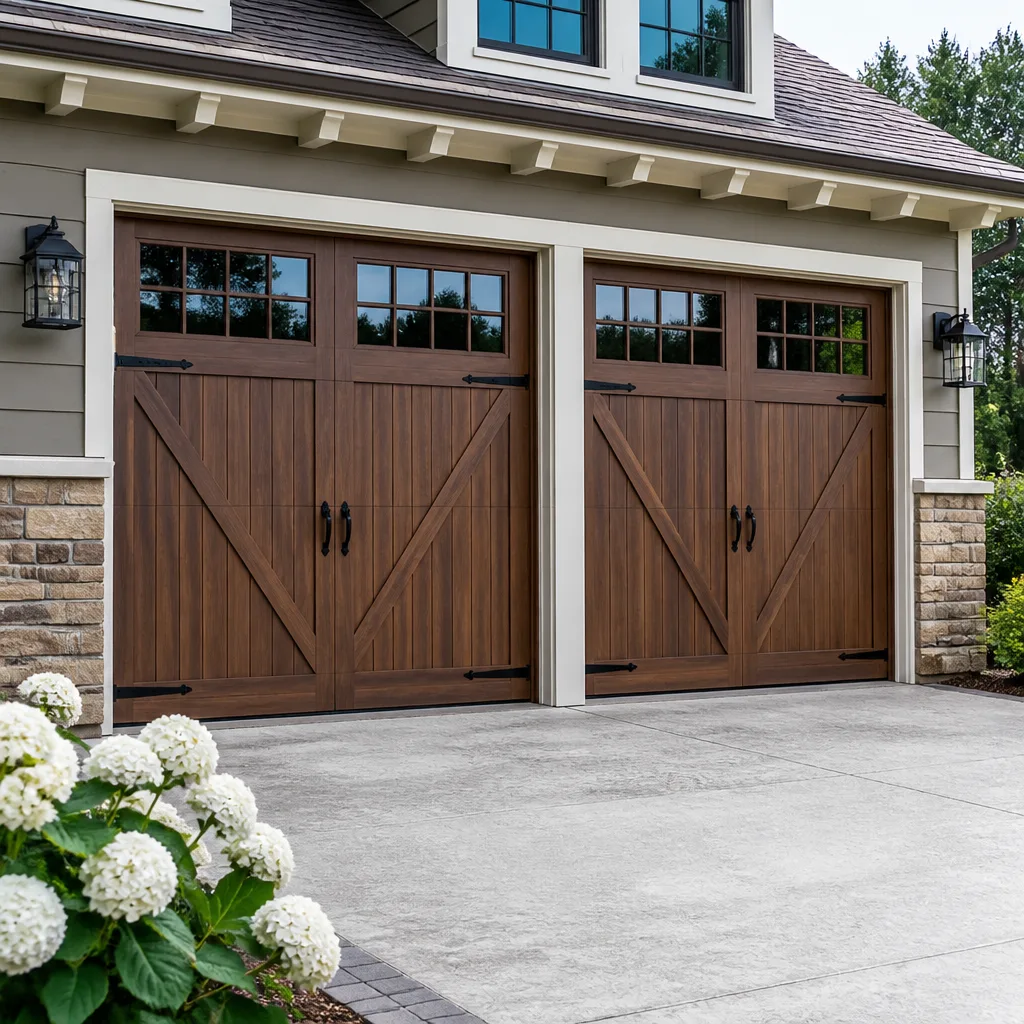 Carriage house
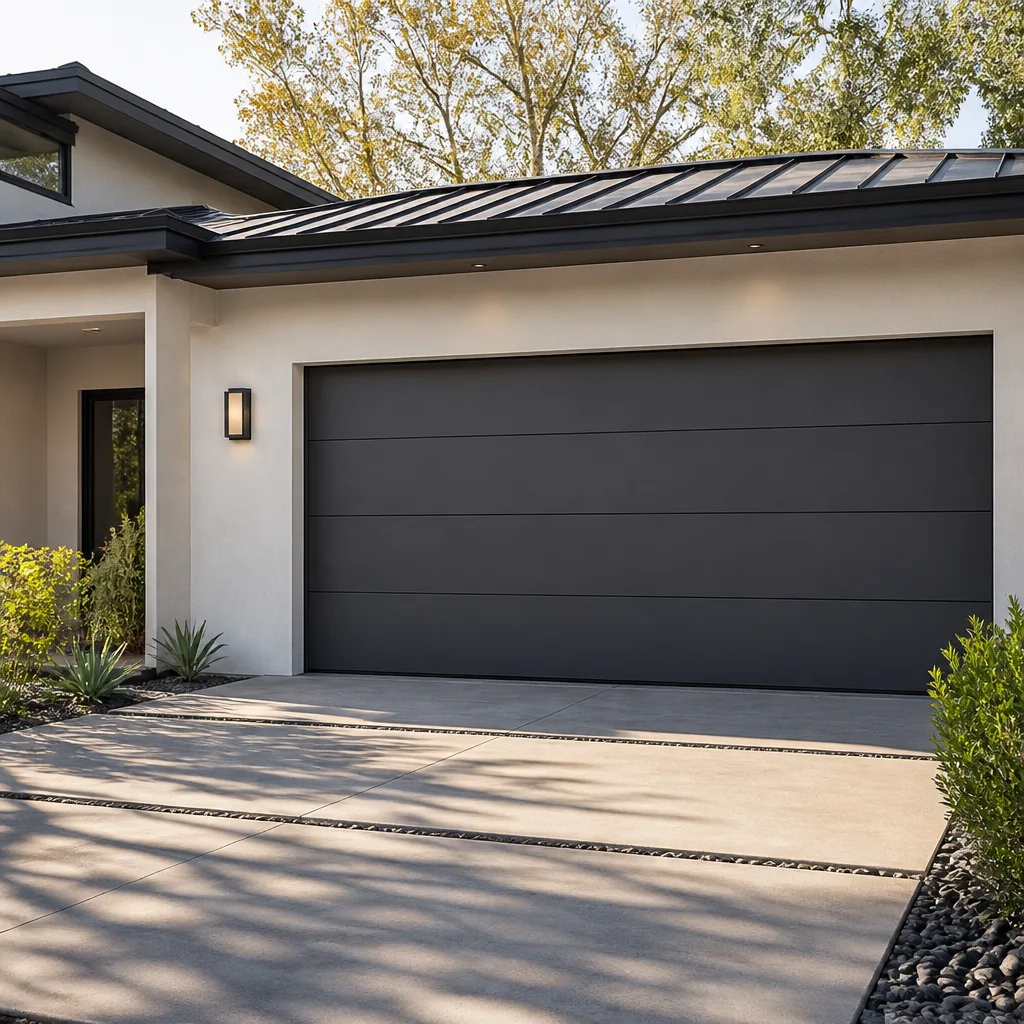 Modern flush
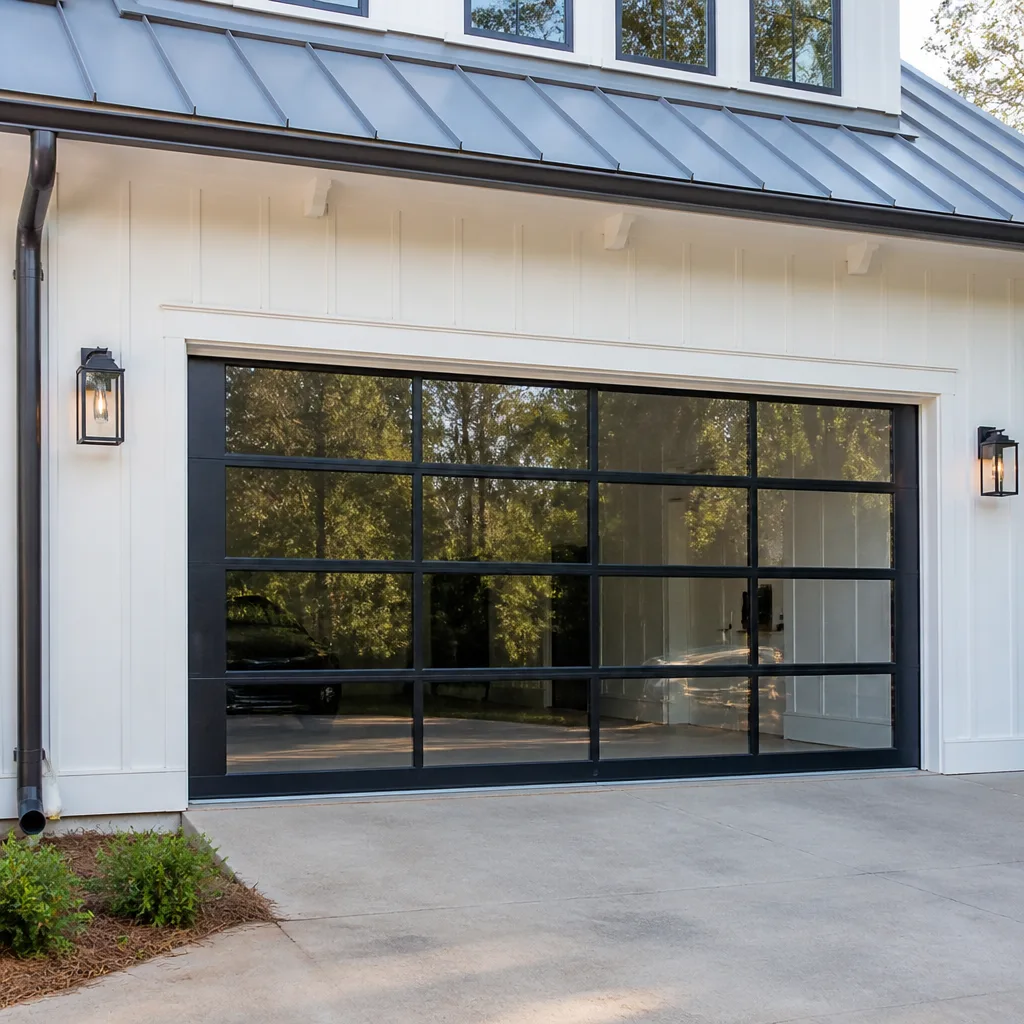 Full-view glass
 LiftMaster openers
 Chamberlain openers
Full 25-point door and opener safety check with every visit - springs, cables, rollers, tracks, and your LiftMaster or Chamberlain opener included
You get a price before we start. It does not change when the pro arrives.
Get your free estimateDIY vs Professional Garage Door: The Brookland Homeowner’s Decision Guide
A torsion spring holds several hundred pounds of stored tension. That’s not a liability disclaimer, it’s a physics fact, and it’s what makes spring work categorically different from replacing a bottom seal that any homeowner can handle in twenty minutes with a screwdriver and a steady hand. Most DIY debates treat garage door repair as one skill question, as if you’re either handy or you’re not. The honest answer is that a garage door is a machine with a dozen distinct jobs inside it, some of which you can own outright, some you can attempt with real caution, and some that belong to a trained technician. This guide draws that line for Brookland homeowners, task by task, so you know where your time is well spent and where it isn’t.
Quick Answer
You can safely handle garage door maintenance yourself: lubrication, weatherstripping, bottom seals, sensor alignment, and visual inspections. You should not attempt spring replacement, cable work, or high-tension hardware yourself, because those parts store enough energy to cause serious injury. Opener replacement sits in the middle: mechanically doable for some, but often complicated in Brookland by DC electrical permit rules that make the wiring work a licensed electrician’s job. For anything involving springs, cables, or a door that has gone off-track, call a professional.
Styles & brands we work with
- Raised-panel steel
- Carriage house
- Modern flush
- Full-view glass
- LiftMaster openers
- Chamberlain openers
Table of Contents
- Sorting the Jobs: The Honest Three-Tier Breakdown
- Why Spring Replacement Is in a Different Category Entirely
- Opener Installation and DC Permit Requirements
- How to Do Real DIY Maintenance Correctly
- The Off-Track Door: Why This Isn’t a Weekend Project
- What “I’ll Save Money Doing It Myself” Actually Costs
- Brookland Homes and Garage Doors: What’s Different Here
- DIY vs Professional: A Realistic Cost View
Sorting the Jobs: The Honest Three-Tier Breakdown
Not every garage door repair is dangerous, and pretending otherwise is a sales tactic, not a service. Here’s how we’d sort the common jobs you’ll face in a Brookland garage. This is the line we’d draw for a friend, not the line that protects the biggest invoice.
Tier 1: Safe to DIY
- Lubricating hinges, rollers, and the torsion bar with a proper garage door lubricant
- Replacing bottom weather seals and side weatherstripping
- Cleaning and aligning the safety sensors at the bottom of the tracks
- Wiping and re-lubricating the opener chain or belt per the manufacturer’s guide
- Tightening bolts on the hinges and bracket plates (hand-tight, not torqued hard)
- Visual inspection of cables, springs, and rollers for obvious wear
Tier 2: DIY With Caution
- Roller replacement (doable, but the door must be fully raised and locked out, and the wrong roller size causes premature wear)
- Replacing a remote or wall console
- Replacing the opener’s logic board on a model you’ve researched (Craftsman and Genie units are the most forgiving here)
- Adjusting the opener’s travel limits on a door that’s drifting
Tier 3: Do Not DIY
- Torsion spring replacement
- Extension spring replacement
- Any work on the lift cables
- Replacing drums or the center bearing plate
- Straightening a door that has bent or come off-track
- Any repair on a door whose spring has already broken, because the door is now supported by the opener alone
For the Tier 3 jobs, the right call is garage door repair with a technician who does this daily. If you’re in Brookland and you’re not sure which tier your problem falls into, describe it over the phone and we’ll tell you whether it’s a homeowner job or a technician job.
Why Spring Replacement Is in a Different Category Entirely
A garage door spring stores the energy to lift a door that often weighs 150 to 400 pounds, and it holds that energy whether the door is open or closed. A torsion spring, mounted on the bar above the door, is wound tight enough that the metal is under constant load. An extension spring, running along the horizontal tracks on either side, is stretched to a specific tension. Both are loaded springs, and that’s the whole point: they’re doing heavy work every time the door moves.
When a spring breaks, it releases that stored energy instantly and unpredictably. The failure itself isn’t usually the injury. The injury comes from the person working on the spring, or on the door after a spring has failed without realizing the opener is now carrying the door’s full weight. We’ve seen what happens when a door crashes down because someone tried to lift a broken-spring door by hand and let it slip.
Spring replacement also isn’t only a safety problem. It’s a measurement problem. Torsion springs are specified by wire gauge, inner diameter, and length, and a spring with the wrong spec will either fail early or overload the opener. Extension springs have similar matching rules. This is why in our experience the correct spring for your door isn’t always the one that looks closest at the hardware store.
Springs, cables, and drums are one connected system. If you replace one, the others are now out of balance with it. A technician replacing a spring also checks cable tension, drum alignment, and the door’s balance point at the same time. A homeowner replacing only the broken component is often the same homeowner calling back three weeks later with a bent track. That’s not a scare line, it’s a pattern we see in Brookland and across the surrounding neighborhoods.
Short version: not every garage door job is dangerous, but spring work always is. It’s the one category we don’t hedge on.
Opener Installation and DC Permit Requirements
Replacing an opener is the job most DIY-minded homeowners think they can handle, and mechanically, a lot of them can. The tricky part isn’t mechanical, it’s legal. In DC, installing or replacing a garage door opener usually involves hardwiring the unit into a permanent electrical circuit, and permanent wiring changes typically require an electrical permit through the DC Department of Buildings. The exact scope of what’s permitted and what isn’t varies by situation, so confirm with the Department before you start.
What that means in practice:
- A plug-in opener swap that uses an existing dedicated outlet is often a mechanical job a confident homeowner can do.
- A new opener that requires running a new circuit, adding a junction box, or hardwiring into the panel is electrical work, and pulling that permit typically requires a licensed electrician.
- A new construction or major renovation with a wall-mounted opener and dedicated circuit is almost always permitted work.
- Installing a new door plus opener at the same time (as in a full replacement) is usually the point where hiring a specialist is simpler than coordinating an electrician and a handyman yourself.
This is why we treat garage door opener repair and opener replacement as different scopes. Repairing an existing opener that’s plugged in and working on the same circuit is usually straightforward. Installing a new unit, especially on an older Brookland home with a panel that’s been added onto over the years, involves sitting down and figuring out what the electrical reality is before anyone picks up a screwdriver.
Homeowners with a Wayne Dalton or Raynor opener face another wrinkle: the mounting bracket holes don’t always line up with the old unit, and the door’s balance point shifts with the new weight. That’s a mechanical fit issue, not an electrical one, but it’s the piece most folks underestimate. If you’re not confident about the bracket alignment, that’s the point to hand it off.
How to Do Real DIY Maintenance Correctly
Here’s what we’d actually teach a Brookland homeowner to do on their own door, because a door that’s maintained twice a year lasts longer and calls for help less often. This is the work you can own without risk.
Lubrication: what to use and what to avoid
Use a purpose-made garage door lubricant, not WD-40, not engine oil, not grease from the kitchen shelf. White lithium spray works well for the torsion bar and the hinges. Silicone spray is better for the rollers and the tracks. The rule is: lubricate the moving parts, keep the track itself clean and dry-ish (silicone is fine, grease is not, because grease attracts grit that grinds the rollers).
Lubricate twice a year, and add a third pass if you notice the door sounding louder than usual. If the noise continues after lubrication, stop and look closer. Grinding or scraping is a sign of a hardware problem that lubricant won’t fix.
Weatherstripping and bottom seals
The bottom seal is the rubber strip along the floor edge of the door. If it’s cracked, brittle, or leaving daylight visible under the door, it needs replacing. The right approach is a direct replacement of the seal that matches the door’s bottom retainer profile. Most hardware stores sell universal replacement kits; measure the retainer width before you buy, because a seal that doesn’t seat properly will rub on the floor and wear out in weeks.
Side and top weatherstripping is similar: replace in-kind, check the door’s closing pressure, and re-check after a week. DC’s humid summers and cold winters are hardest on door seals, so a schedule of checking the seals each spring is a sensible habit for any Brookland homeowner.
Sensor alignment
The two small sensors at the bottom of the tracks are what stop the door from closing on something (or someone). If the door won’t close and the opener’s light is blinking, the sensors are usually the culprit. Clean the lenses, check that the small LED on each is lit, and adjust the bracket so the two sensors face each other squarely. If the LED stays off after cleaning and adjusting, the sensor itself is failing and needs replacing.
What to check without touching
Once a season, do a visual inspection and a balance test. Pull the opener’s release handle only when the door is fully closed, then lift the door by hand to about waist height and let go. A balanced door stays roughly where you put it. A door that drops or rises on its own has a spring or balance issue. Do that check, then re-engage the opener by hand without force.
The Off-Track Door: Why This Isn’t a Weekend Project
A door that has come off its track is in a failed state. Even if the door is sitting there looking almost normal, the rollers have left their channels, the cables are likely slack or crossed, and the door’s weight is now resting on whatever is holding it up. Forcing the door back onto the track, or running the opener to see if it settles, is how doors get bent, cables get snapped, and people get hurt.
If your door is off-track, here’s what to do:
- Leave the door where it is. Don’t run the opener. Don’t force the door.
- If the door is partially open and hanging, keep people and pets out of the garage until it’s secured.
- If the door is fully closed and won’t open, that’s not an emergency, it’s a repair call. Call and describe what happened.
- If the door is partially open and looks unstable, treat it as an emergency and call, because a door that drops on its own is a serious risk.
An off-track door is what our emergency service exists for. We answer 24/7. Fast dispatch from 7am to 7pm, Sunday through Friday. If you’re in Brookland and your door has come off-track or a spring has let go, that’s the call to make rather than the one to postpone until the weekend. We’ve had a lot of homeowners call us on a Sunday morning after a Saturday failure, and we can usually get a technician out that day.
What “I’ll Save Money Doing It Myself” Actually Costs
The math on DIY looks simple: the cost of parts versus the cost of a repair. It’s rarely that simple. A DIY repair that fails doesn’t usually fail quietly. It fails in a way that creates a second problem the technician then has to diagnose and fix, and the honest invoice is the combined cost of both problems.
Here’s how that plays out in practice:
- A homeowner replaces a bottom seal with a universal strip that doesn’t fit, and the door rubs the seal every cycle. Two months later the seal is worn through, the bottom bracket is bent, and the technician is diagnosing a seal plus a bracket plus a track alignment.
- A homeowner lubricates with grease instead of the right product, the rollers pick up grit, and the door starts grinding. Now it’s a lubrication problem being solved by replacing rollers that didn’t actually need replacing a year ago.
- A homeowner adjusts the opener’s travel limit too far, the door slams the floor each cycle, and the metal fatigues at the bottom section joint. What started as a drift turns into a panel replacement.
- A homeowner installs a new opener without matching the bracket to the door’s weight and the door’s balance point drifts. It works for a few months, then the opener strain becomes a stripped gear, and the diagnosis is a worn opener plus a balance issue.
In our experience the pattern isn’t complicated. DIY that succeeds is the DIY on the safe list. DIY that creates a follow-on problem is usually on the Tier 2 or Tier 3 side, and once a technician has to diagnose from a confused starting state, the visit takes longer than it would have if the homeowner had called at the first sign of trouble.
That’s the honest answer to “will DIY save me money.” Sometimes yes, on the right jobs. Sometimes no, when the DIY fix is really a project with the wrong starting tools. If the job is spring, cable, or track, treat the “savings” as imaginary and call.
Brookland Homes and Garage Doors: What’s Different Here
Brookland is a neighborhood that grew in layers. There are older detached homes near Michigan Avenue with garages that were added later, some of them narrower than the standard two-car opening you’ll find on newer construction farther out. There are townhomes closer to the Catholic University area where the garage sits under the house and the door span is different from what you’d see on a suburban build. There are also a fair number of garages built with wood or older steel doors, some of them still running on original extension springs.
Each of these details changes the job. An older door with extension springs needs a technician who plans the repair around the danger of the stretch spring on both sides, not just the one that snapped. A non-standard-width opening often means a part from the shelf won’t fit and needs to be measured. A door under the house is a different access problem than a detached garage. A newer Clopay or Amarr door in a Brookland renovation is usually a straightforward repair with predictable parts.
We’re a Brookland business, and our technicians have up to 11 years of experience working on the specific mix of home styles here. That’s not a marketing line, it’s a practical point: the wrong diagnosis is more expensive when the door isn’t standard, and we’ve seen both directions of that call – the homeowner who wanted a new door when the existing one just needed a spring and an alignment, and the homeowner who kept repairing a door that was past saving. Diagnostics come first, and the right fix is usually the smaller one.
If you’re planning a full replacement, the local climate matters. Brookland’s summer humidity and its winter cold put real wear on door seals, hinges, and openers. Doors on the west and south side of a building get more sun exposure and the paint and finish wear faster. A door that’s installed with attention to insulation, seal choice, and solar exposure lasts significantly longer than one installed with what’s on the truck. That’s the whole point of a proper garage door installation with measure, order, and site-fit before the new door arrives.
DIY vs Professional: A Realistic Cost View
A clear line-item view helps here. We’re not going to invent numbers for your specific door, but we can show what the trade-off looks like in broad strokes. All professional costs below are estimates, and the written quote you receive after we’ve measured your door is the actual price. Prices vary by door size, weight, and hardware.
| Task | DIY Feasibility | Typical Professional Cost (estimated) |
|---|---|---|
| Weatherstripping or bottom seal replacement | Yes | Included in general repair visits, often modest when part of a larger fix |
| Lubrication and sensor alignment | Yes | Included in routine maintenance; usually not worth a visit on its own |
| Roller replacement (full set) | With caution | Quoted per job after we see the door |
| Opener replacement (same circuit, plug-in) | With caution | Quoted per job; price varies by opener model and bracket match |
| Opener replacement (new hardwired circuit) | No – requires a licensed electrician | Quoted per job; permit and electrical work quoted separately by the electrician |
| Torsion spring replacement (one spring) | No | Quoted per job; a matched pair costs roughly twice a single spring |
| Extension spring replacement (one spring) | No | Quoted per job; pair pricing applies the same way |
| Cable or drum repair | No | Quoted per job after inspection of the whole system |
| Off-track door straightening | No | Quoted per job; depends on how far the door is bent |
| Full door replacement (with opener) | No | Free measure and written price before ordering; scheduled around lead time |
For a spring repair specifically, the honest number that gets quoted to a Brookland homeowner is per spring, and a matched pair (which is the standard approach) is roughly double that. We don’t sell a single-spring replacement as the default when the pair is due, because the second spring is going to fail on roughly the same timeline as the first. That’s a service call twice for one job if we only do half of it.
The DIY math on springs also has an insurance angle that isn’t always obvious. Homeowners insurance policies often exclude injuries to the policyholder from their own DIY work, and the medical cost of a spring injury can dwarf the price of the repair. That’s a decision most people only think about once, and afterwards they don’t do it again.
Common Mistakes to Avoid
- Greasing the tracks. The tracks should stay clean. Grease attracts the very grit that wears down the rollers, and once the track is greasy it’s hard to get back to clean. Use silicone spray on the track if anything at all.
- Hanging weight on a broken-spring door. If a spring has failed, the opener is now trying to lift the whole door. Running the opener on a broken-spring door is how openers strip gears and doors come down unevenly.
- Using a random spring from a big-box store. Spring gauge, inner diameter, and length all matter. A mismatched spring will fail early or overload the opener. The correct spring for a Brookland door is figured from the door’s weight and hardware, not from a shelf label.
- Starting an opener swap before checking the electrical. In DC, hardwiring a new opener into the electrical system usually needs an electrical permit. Confirm with the DC Department of Buildings before starting, and be ready for the electrician to be the right next call rather than the wrong one.
- Forcing an off-track door back onto the track. If the cables are slack or crossed, forcing the door can snap a cable and bend the lower panel. That’s the point where a straightforward repair becomes a replacement.
- Ignoring a repeatedly tripping opener. If the door reverses mid-cycle or the opener stops on its own, most people attribute it to the opener. It’s more often a balance problem or sensor issue. Diagnosing the wrong part is more expensive than a visit to the right one.
- Cranking up opener travel limit to close a door that’s not sealing. That’s a symptom of a worn seal, a misaligned track, or a door that’s out of balance. Raising the travel limit just makes the door hit harder each cycle.
See the difference
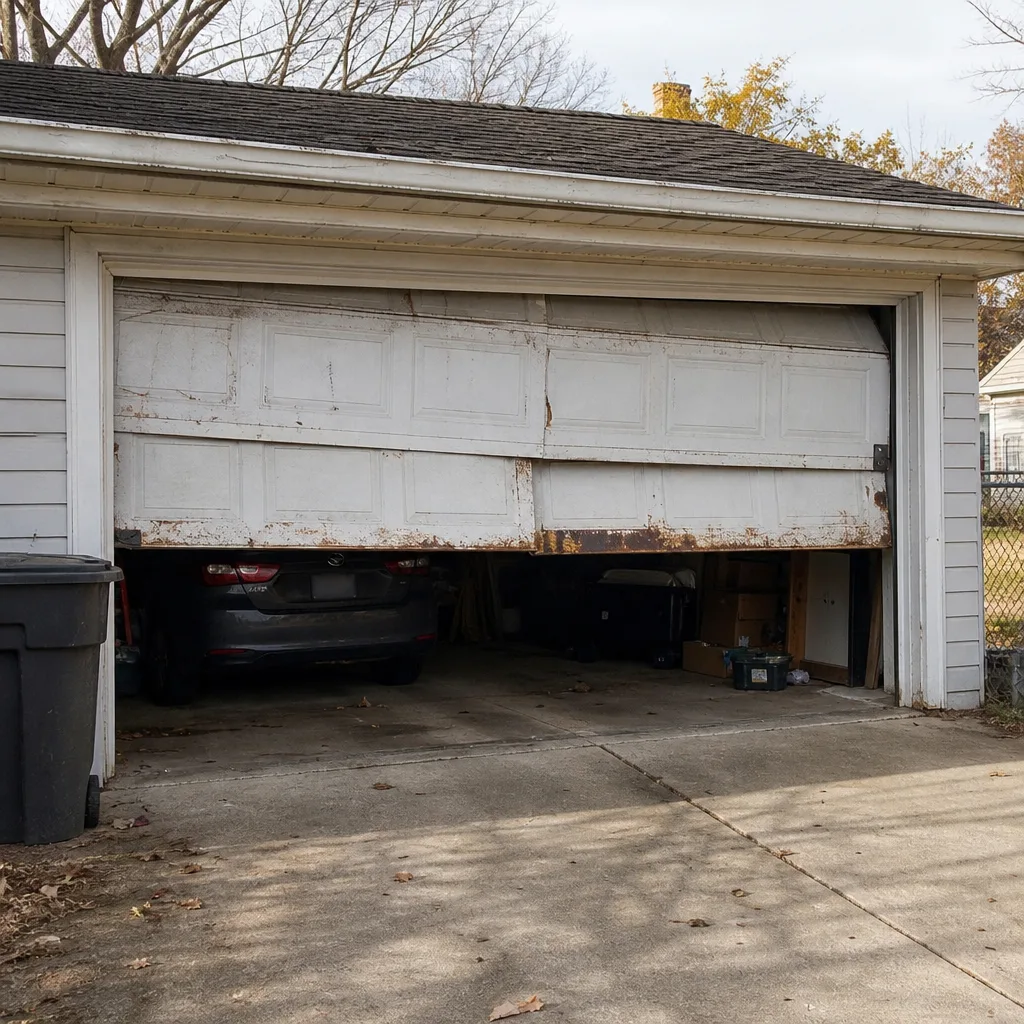 Before
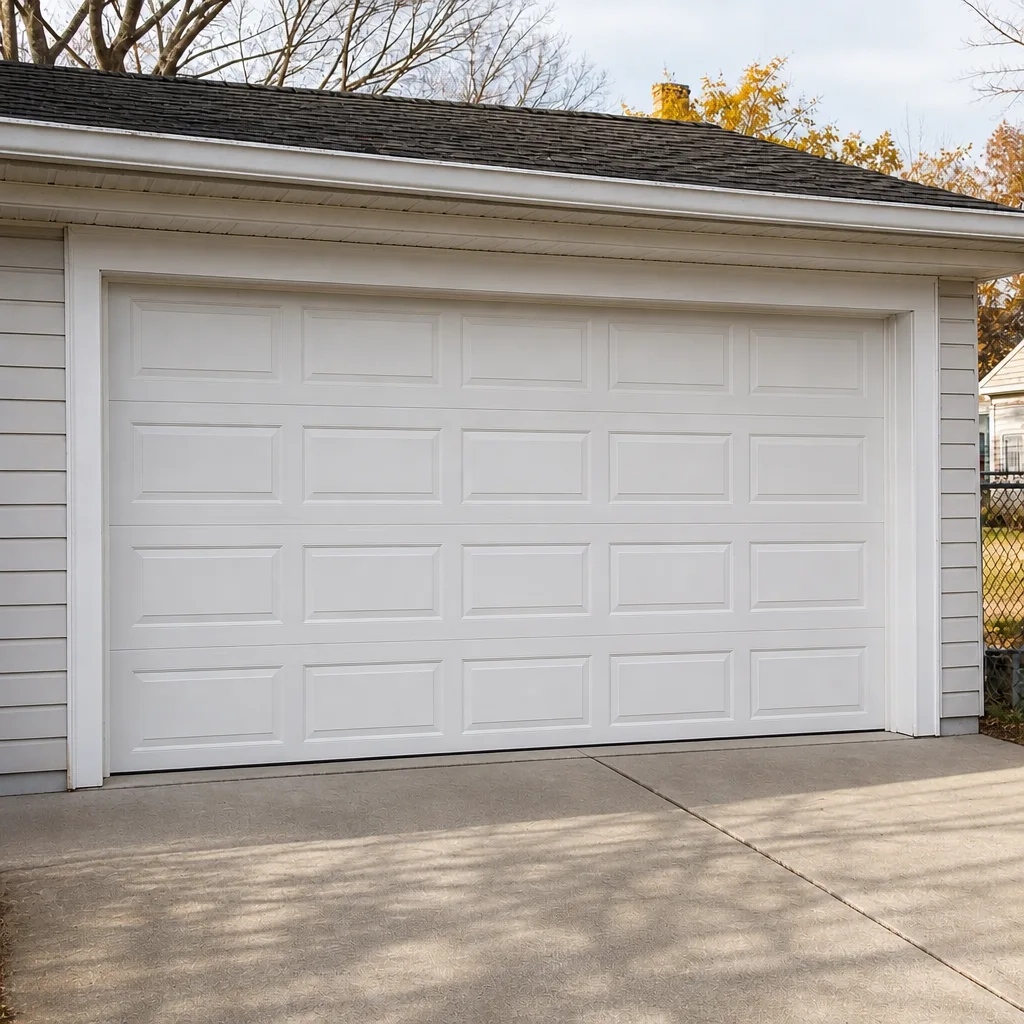 After
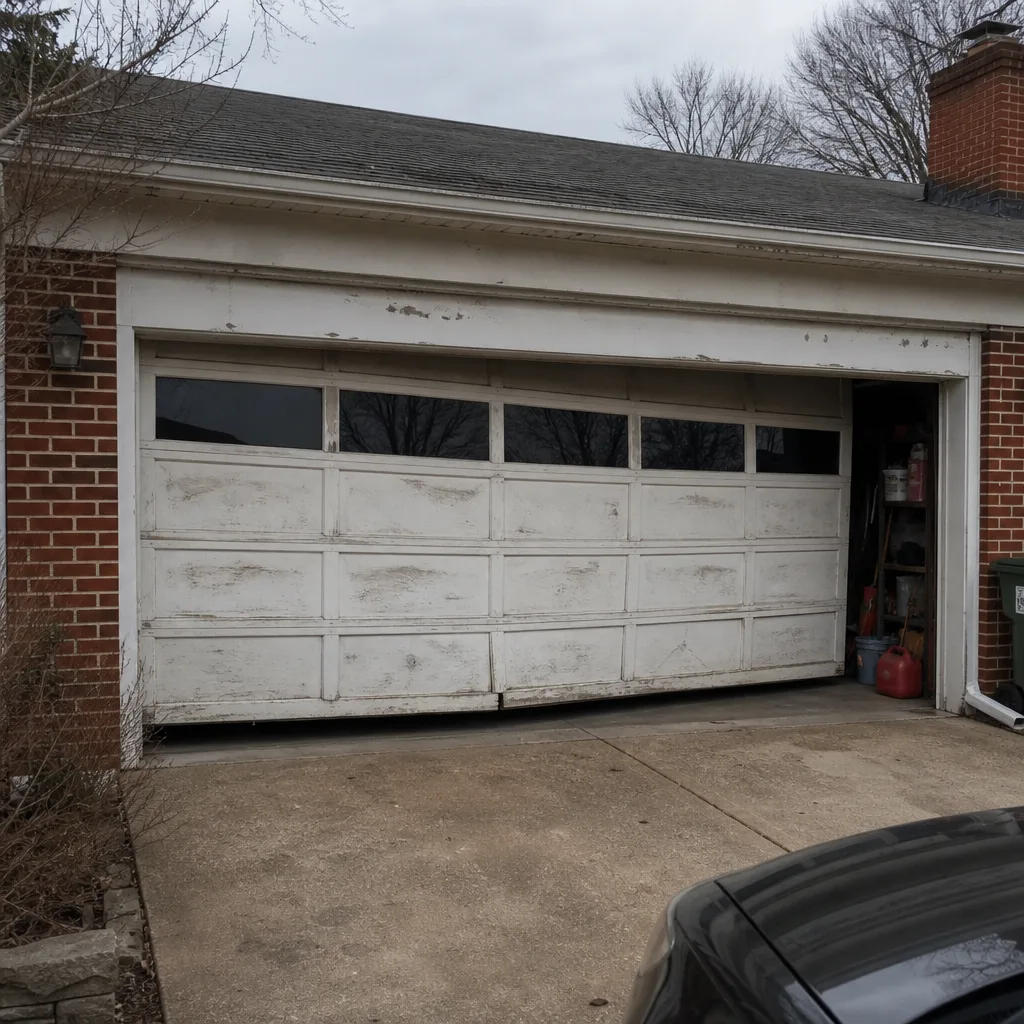 Before
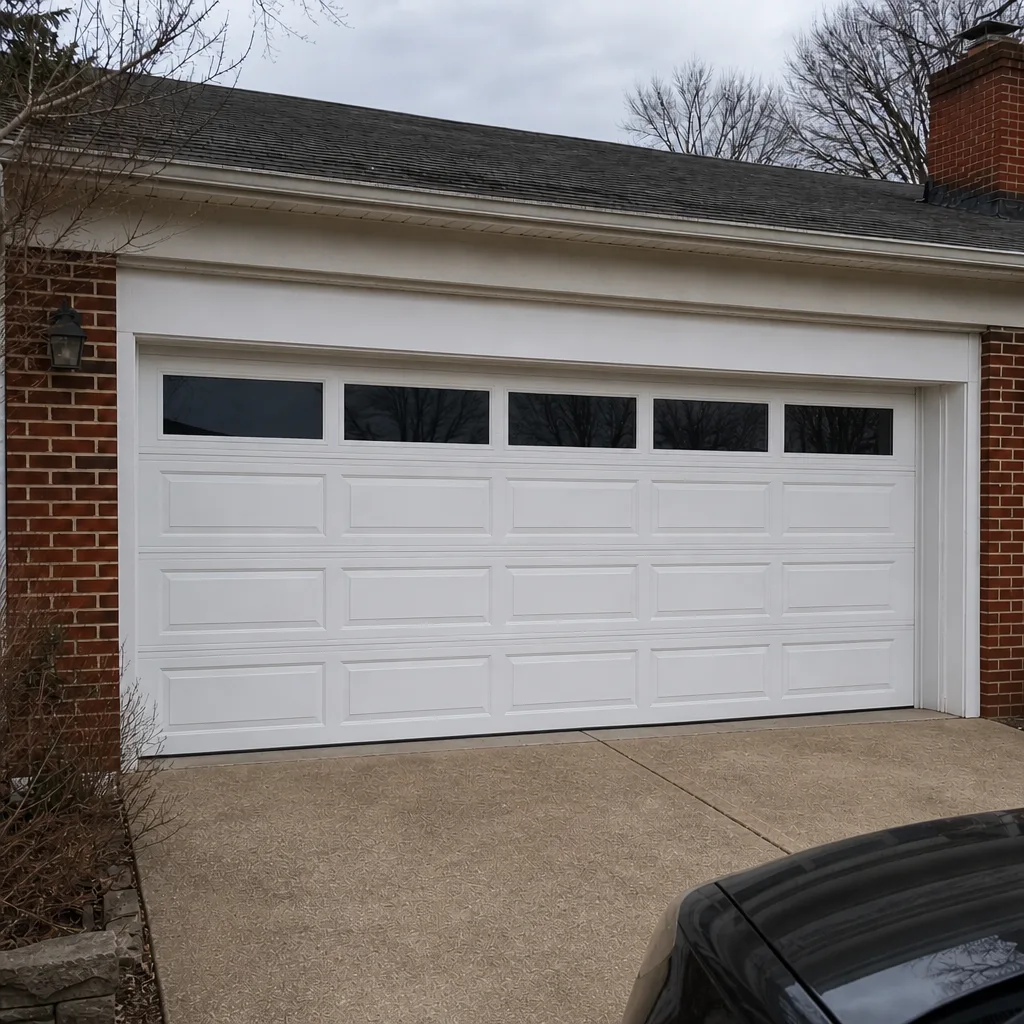 After
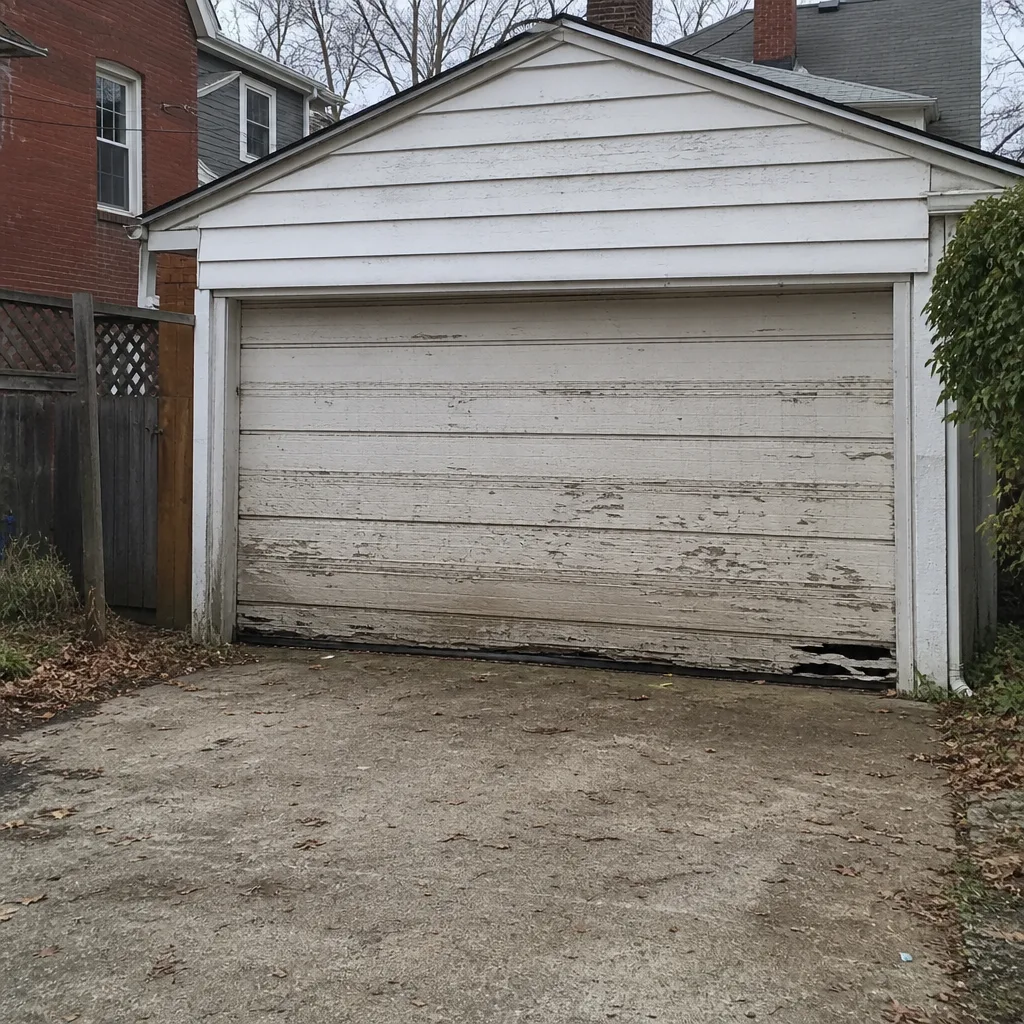 Before
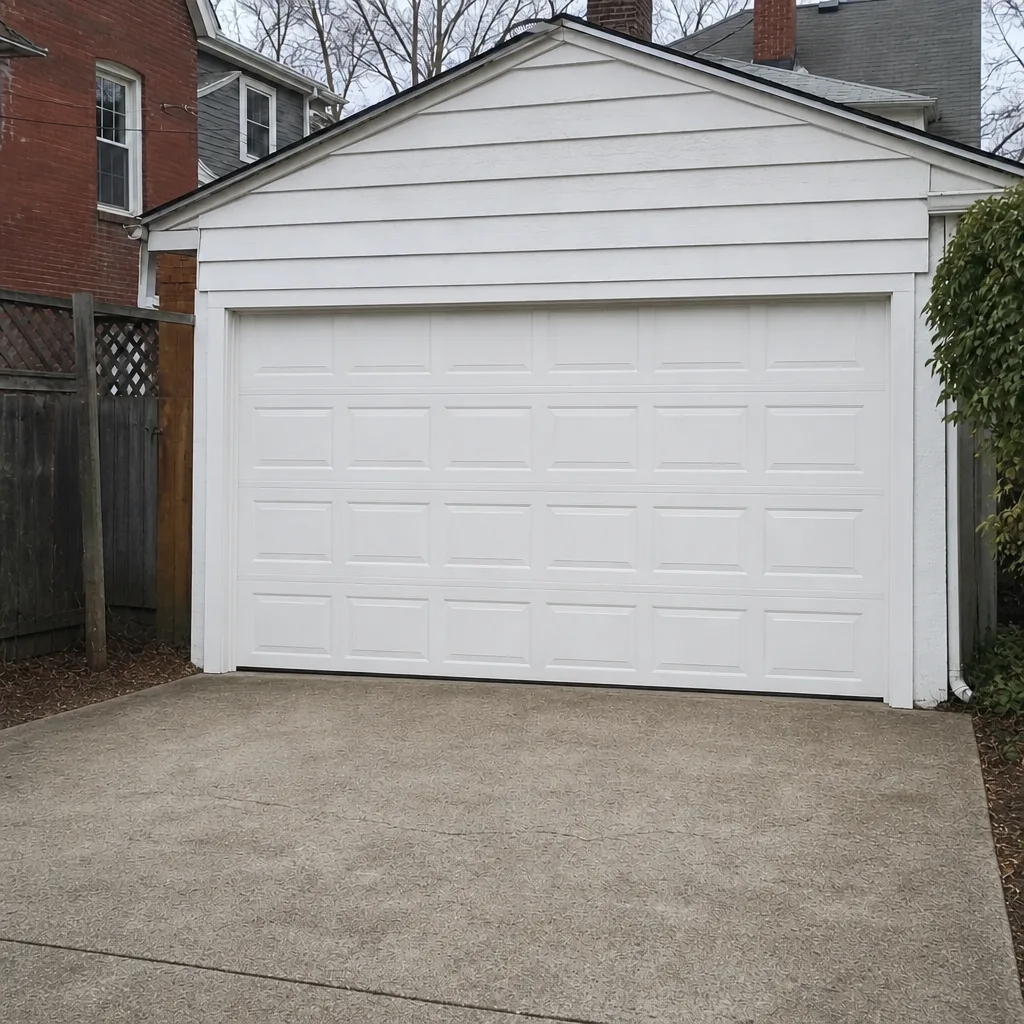 After
When to Call a Professional
Call us when the job involves springs, cables, drums, a door off-track, an opener that needs new wiring, or a problem you’ve already tried to fix and now can’t diagnose cleanly. Also call when the door is on an old system with extension springs and you’re not sure of the age – those springs fail suddenly and we’d rather look before something lets go. And call when you’re planning a new door or opener: measure, order, and site-fit are the whole point of a replacement, and it’s the part of the job that goes wrong most often when it’s rushed.
Garage Door Repair Brookland offers free estimates in Brookland. Call (888) 655-9410. We answer 24/7 and fast dispatch is available from 7am to 7pm, Sunday through Friday. Tell us what the door is doing and we’ll tell you honestly whether it’s a Tier 1 job you can handle yourself or a Tier 3 job we need to see. If we’re recommending a repair, the price is quoted and agreed before any work starts. No surprise invoice at the end.
Frequently Asked Questions
We don’t recommend it, and we’re not alone in that. Torsion springs and extension springs store enough energy to cause serious injury when they release, and mismatched springs damage the opener and the door. A technician is the right call. If you’re in Brookland, call (888) 655-9410 for a free estimate.
Usually yes, if the work involves hardwiring the opener into a new or existing circuit. The DC Department of Buildings handles electrical permits, and the exact requirement depends on the install, so confirm with them before starting. If the opener plugs into an existing dedicated outlet, that’s often a simpler situation. When in doubt, ask.
Spring pricing is per spring, and every quote is based on the door’s weight and hardware after we’ve seen it. A matched pair is typically replaced together, and a pair costs roughly twice a single spring. Call (888) 655-9410 for an exact quote on your door. Estimates are free.
Yes, that’s what our emergency service is for. We answer 24/7 and fast dispatch is available from 7am to 7pm, Sunday through Friday. Call (888) 655-9410 and describe what happened. A call outside dispatch hours is booked into the next opening, Sunday through Friday, 7am to 7pm.
Worth doing yourself, in our view, for the safe jobs. Lubrication, weatherstripping, sensor alignment, and a visual inspection are the work a homeowner should own. It keeps the door running well and reduces how often you need a repair visit. Where it stops being worth it is once the task involves springs, cables, or opener wiring. Those should be a technician’s visit.
Yes. We work on LiftMaster, Chamberlain, Genie, Clopay, Amarr, Wayne Dalton, Craftsman, and Raynor, and we diagnose the actual problem on your equipment rather than steering you toward a preferred product line. If your door wasn’t in that list, describe it when you call and we’ll tell you if it’s a system we handle. Call (888) 655-9410 for a free estimate.
No, the written quote you receive after we’ve looked at the door is the price. If something turns out to be more involved than the description suggested, we discuss it before doing any additional work. There’s no hidden line item on the invoice. That’s the policy. Call (888) 655-9410 for an estimate that actually reflects your door, not a phone-book guess.
The Bottom Line
The DIY versus professional question isn’t a matter of skill, it’s a matter of which jobs carry the kind of risk that turns a saved dollar into a hospital bill or a second repair. Lubrication, weatherstripping, sensor alignment, and visual inspection are yours to handle, and doing them correctly is a real cost saver. Springs, cables, and off-track doors are not yours to handle, and the DC electrical permit rules on opener replacement mean the wiring piece usually isn’t either. If you’re on the fence about which tier your problem belongs to, that’s the right moment to call rather than to guess. We’re happy to say honestly whether it’s a job you can do or a job we should see.
Our technicians have up to 11 years of experience working on the door systems most common in Brookland. We work on more than eight major brands, and garage doors are all we do. Springs, openers, panels, and full replacements, all handled in one call. The right fix, not the easiest upsell.
Call (888) 655-9410 for a free estimate. We answer 24/7. Fast dispatch from 7am to 7pm, Sunday through Friday. If your door failed last night and you’re reading this this morning, that call is the one to make.
Written by the team at Garage Door Repair Brookland.